.png)

September 7, 2026
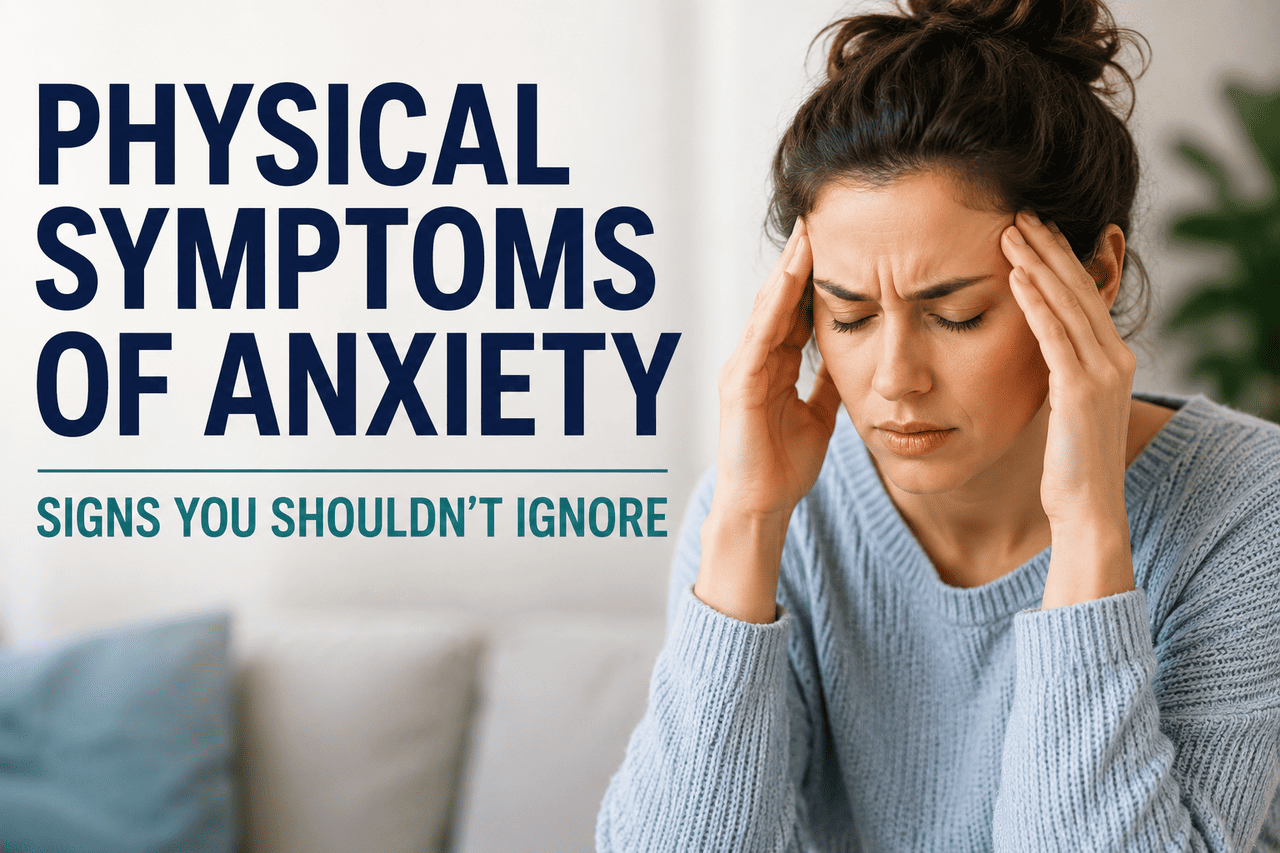
Anxiety is often thought of as a mental or emotional condition, but it can affect the body just as much as the mind. In fact, many people first notice physical symptoms before they recognize they are experiencing anxiety.
From a racing heart to digestive issues, anxiety can produce a wide range of physical sensations that may feel alarming, especially when the cause is unclear.
At Daniel Perry MD, a trusted psychiatrist in Savannah GA, patients frequently seek help after experiencing persistent physical symptoms that interfere with work, relationships, and daily life. Understanding the connection between anxiety and the body is an important step toward finding effective treatment.
Yes. Anxiety activates the body's natural stress response, commonly known as the "fight-or-flight" response.
When the brain perceives a threat, it releases stress hormones such as adrenaline and cortisol. These hormones prepare the body to respond to danger by increasing heart rate, muscle tension, and alertness.
While this response is helpful in true emergencies, chronic anxiety can keep the body in a prolonged state of stress, leading to ongoing physical symptoms.
Anxiety affects everyone differently, but some physical symptoms occur more frequently than others.
One of the most common physical symptoms of anxiety is a racing heart.
People may notice:
Although these symptoms can feel frightening, they are often related to the body's stress response. However, new or severe chest pain should always be evaluated by a medical professional.
Anxiety often causes muscles to remain tense for extended periods.
This may result in:
Many people do not realize that chronic muscle tension may be related to anxiety rather than a physical injury.
Anxiety may cause:
These symptoms commonly occur during periods of heightened stress or panic.
The brain and digestive system are closely connected.
Anxiety can contribute to:
For some individuals, digestive symptoms become one of the earliest signs of chronic anxiety.
During periods of intense anxiety, changes in breathing patterns can reduce carbon dioxide levels in the blood, leading to:
These symptoms often improve as breathing returns to normal.
Anxiety can activate sweat glands even when there is no physical exertion.
People may notice:
Living with chronic anxiety requires constant mental and physical energy.
Over time, many individuals experience:
Sleep disturbances are common among people with anxiety.
Symptoms may include:
Poor sleep often worsens anxiety symptoms, creating a cycle that can be difficult to break.
The nervous system does not distinguish between emotional stress and physical danger.
When anxiety is ongoing, the body remains in a heightened state of alertness, affecting multiple systems, including:
This explains why anxiety can produce symptoms throughout the body rather than affecting only mood.
Yes.
Because anxiety produces physical symptoms, it is sometimes mistaken for:
Likewise, certain medical conditions can also mimic anxiety.
A comprehensive evaluation helps determine the underlying cause of symptoms.
You can learn more about
👉 what happens during a psychiatric evaluation
to understand how mental health conditions are assessed.
You should consider speaking with a psychiatrist if:
Early treatment often prevents symptoms from becoming more severe.
If you are unsure whether it is time to seek help, you may also find it helpful to read
👉 When Should You See a Psychiatrist Instead of a Therapist?
Treatment depends on the severity of symptoms and each person's individual needs.
Common treatment options include:
At Daniel Perry MD, treatment plans are personalized to address both the emotional and physical effects of anxiety.
Yes.
Many people with anxiety also experience:
Because symptoms often overlap, an accurate diagnosis is essential.
If concentration problems are one of your primary concerns, you may also want to read
👉 Is It Anxiety or ADHD? How to Tell the Difference in Adults
Physical symptoms are often one of the earliest signs of anxiety, yet they are frequently misunderstood or mistaken for unrelated medical conditions.
Recognizing the connection between anxiety and physical health can help you seek appropriate care before symptoms begin affecting your quality of life.
At Daniel Perry MD in Savannah, comprehensive psychiatric evaluations help identify the underlying causes of anxiety and develop personalized treatment plans that address both emotional and physical symptoms.
If persistent anxiety is affecting your health or daily life, seeking professional support can be an important step toward feeling better.
.png)
