.png)

September 7, 2026
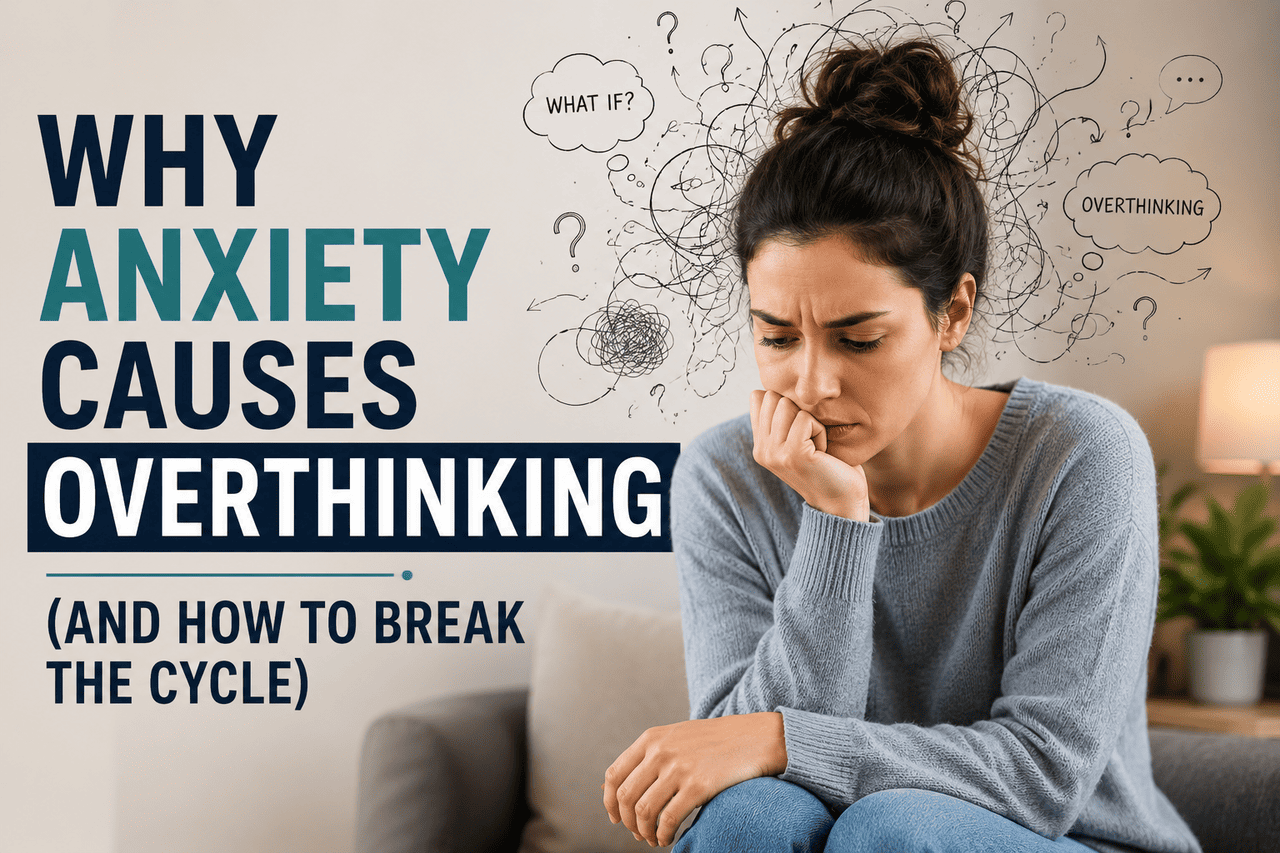
Have you ever replayed the same conversation over and over in your mind or worried about every possible outcome before making a decision? While occasional overthinking is something most people experience, persistent overthinking can become exhausting and interfere with daily life.
For many individuals, chronic overthinking is closely linked to anxiety. When the mind is constantly searching for potential problems or trying to prevent mistakes, it can become trapped in an endless cycle of worry.
At Daniel Perry MD, a trusted psychiatrist in Savannah GA, many patients seek help after realizing that overthinking is affecting their relationships, work, sleep, and overall well-being. Understanding why anxiety causes overthinking is the first step toward breaking the cycle.
Overthinking is the tendency to repeatedly analyze situations, decisions, or future events beyond what is helpful.
Instead of leading to solutions, overthinking often creates:
While careful thinking can be productive, overthinking usually keeps the mind focused on uncertainty rather than action.
Anxiety causes the brain to become highly alert to possible threats.
When you experience anxiety, your brain constantly asks questions such as:
This heightened state of alertness is part of the body's natural survival response. However, when anxiety becomes chronic, the brain may continue searching for problems even when no immediate danger exists.
As a result, overthinking becomes a way of trying to gain certainty in uncertain situations.
Although everyone thinks deeply from time to time, anxiety-related overthinking often includes:
If these patterns occur frequently, anxiety may be contributing to your symptoms.
Anxiety and overthinking often reinforce one another.
The cycle may look like this:
Without intervention, this pattern can become mentally exhausting and difficult to stop.
Persistent overthinking can impact many areas of life, including:
Overthinking may cause:
Many people overanalyze:
This can create unnecessary stress and misunderstandings.
One of the most common effects of overthinking is difficulty sleeping.
Many individuals report that their minds become most active at bedtime, making it difficult to relax or fall asleep.
Because anxiety affects both the mind and body, chronic overthinking may contribute to physical symptoms such as:
If you've experienced these symptoms, you may also find it helpful to read Physical Symptoms of Anxiety: Signs You Shouldn't Ignore.
Sometimes.
Although anxiety is a common cause, overthinking may also occur alongside:
Because symptoms often overlap, a professional evaluation helps determine the underlying cause.
For example, difficulty concentrating may be related to anxiety rather than ADHD.
You can learn more in Is It Anxiety or ADHD? How to Tell the Difference in Adults.
While it may not be possible to eliminate anxious thoughts entirely, several strategies can help reduce overthinking.
Mindfulness encourages you to focus on the present moment rather than imagined future scenarios.
Even a few minutes of mindful breathing each day can help interrupt repetitive thought patterns.
Ask yourself:
These questions help create a more balanced perspective.
Instead of allowing anxious thoughts to take over your entire day, schedule a specific 15 to 20-minute period to write down your worries.
Many people find that this reduces constant mental rumination.
Repeatedly asking others if everything is okay may temporarily reduce anxiety, but it often strengthens the cycle over time.
Learning to tolerate uncertainty is an important part of managing anxiety.
If overthinking interferes with your daily life, professional treatment can help.
Therapy, medication management, or a combination of approaches may reduce anxiety and improve overall functioning.
At Daniel Perry MD, treatment plans are personalized to address each patient's unique symptoms and goals.
Consider scheduling an evaluation if:
You can also learn more about what happens during a psychiatric evaluation to understand what to expect during your first appointment.
Overthinking is more than simply thinking too much. For many people, it is a symptom of anxiety that can affect emotional well-being, relationships, sleep, and overall quality of life.
The good news is that anxiety and overthinking are highly treatable. With the right support and evidence-based treatment, it is possible to quiet racing thoughts, improve emotional balance, and regain confidence in everyday decision-making.
At Daniel Perry MD in Savannah, comprehensive psychiatric evaluations and personalized treatment plans help individuals understand the root causes of anxiety and develop effective strategies for long-term wellness.
If overthinking is becoming overwhelming, seeking professional support can be an important first step.
.png)
