.png)

August 11, 2026
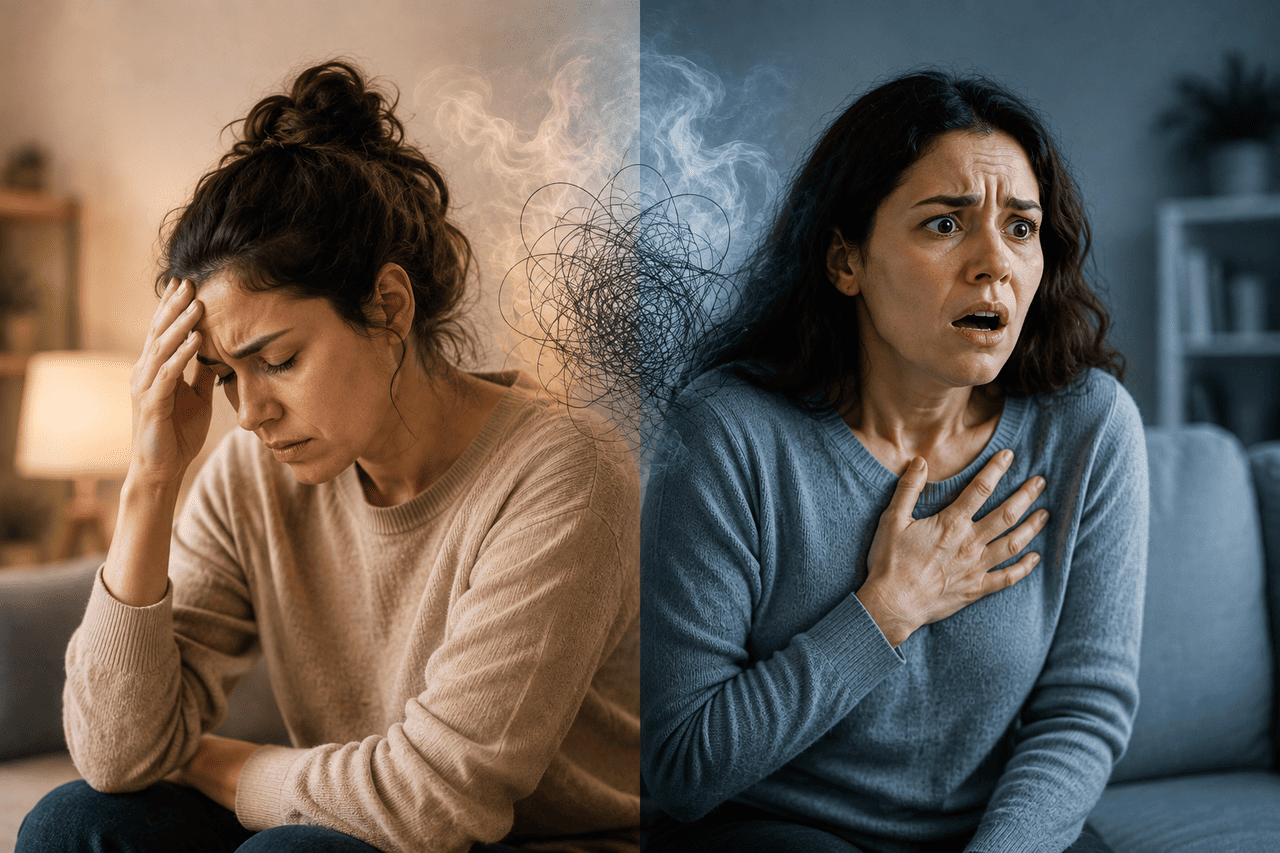
A racing heart, shortness of breath, trembling, dizziness, and an overwhelming sense that something is wrong can be frightening. When these symptoms occur, people often describe the experience as either an anxiety attack or a panic attack.
Although the terms are commonly used interchangeably, they do not necessarily describe the same experience. Panic attacks have recognized clinical features, while "anxiety attack" is a more informal term commonly used to describe a period of intense or escalating anxiety.
Understanding the difference between an anxiety attack vs panic attack can help you better recognize your symptoms and know when it may be time to seek professional support.
At Daniel Perry MD in Savannah, GA, psychiatric evaluations can help patients understand anxiety, panic symptoms, and other mental health concerns that may be affecting their daily lives.
"Anxiety attack" is a commonly used phrase, but it is not a specific diagnosis defined in the Diagnostic and Statistical Manual of Mental Disorders, Fifth Edition, Text Revision (DSM-5-TR).
People often use the term to describe a period when anxiety becomes particularly intense.
An anxiety attack may develop in response to an identifiable concern, such as:
Rather than appearing completely unexpectedly, anxiety may gradually intensify as a person continues worrying about a particular situation.
Someone experiencing intense anxiety may notice difficulty concentrating, muscle tension, restlessness, rapid heartbeat, stomach discomfort, trouble sleeping, or a persistent feeling of dread.
If anxiety is affecting you physically, our article on Physical Symptoms of Anxiety: Signs You Shouldn't Ignore explores this mind-body connection in greater detail.
A panic attack is a sudden surge of intense fear or discomfort accompanied by significant physical and psychological symptoms.
Panic attacks can occur unexpectedly, although they may also happen in response to particular situations or triggers.
Symptoms can become intense quickly.
A panic attack may involve:
Because these sensations can be so intense, someone experiencing a panic attack for the first time may believe they are having a serious medical emergency.
New, severe, or unexplained physical symptoms should not automatically be attributed to anxiety. Appropriate medical evaluation may be necessary to rule out other causes.
The biggest distinction is generally how the symptoms develop and how intense they become.
Anxiety often builds around stress, worry, or anticipation. A person may spend hours or even days worrying about something before their symptoms become particularly difficult to manage.
A panic attack can be much more abrupt. Intense fear and physical symptoms may appear suddenly and escalate rapidly.
There can still be considerable overlap between the two experiences, which is why self-diagnosis based on symptoms alone can be difficult.
No.
Some panic attacks are expected and occur in response to a known trigger. Others appear unexpectedly.
For example, someone who experiences intense fear in a particular situation may have a panic attack when confronted with that situation.
Another person may experience one without understanding why it happened.
The unexpected nature of panic attacks can sometimes create another problem: fear of having another attack.
A person may begin monitoring their body closely, worrying about symptoms, or avoiding places where a previous attack occurred.
Panic attacks typically intensify quickly, with symptoms often reaching their highest level within minutes.
The most intense period may be relatively brief, although some physical and emotional effects can continue afterward.
After a panic attack, a person may feel:
Persistent fear about future panic attacks can itself begin interfering with daily activities.
It can.
Someone experiencing significant anxiety may become increasingly focused on uncomfortable thoughts or physical sensations.
For example, noticing a rapid heartbeat might lead to thoughts such as:
"What if something is seriously wrong?"
That thought can increase fear, which may further increase the heart rate and other physical sensations.
The resulting cycle can make symptoms feel increasingly overwhelming.
This relationship between thoughts and anxiety is also why some people become caught in repetitive worry. Our article Why Anxiety Causes Overthinking (And How to Break the Cycle) explains how this pattern can develop.
No.
Experiencing a panic attack does not automatically mean someone has panic disorder.
Panic attacks can occur in the context of different mental health conditions, and some people may experience an isolated panic attack without developing an ongoing disorder.
Panic disorder involves a broader clinical pattern that includes recurrent unexpected panic attacks along with persistent concern or behavioral changes related to additional attacks.
A psychiatric evaluation can help determine what symptoms represent rather than relying on a single experience to make a diagnosis.
Panic attacks can produce very real physical sensations.
Rapid heartbeat, chest discomfort, dizziness, difficulty breathing, and sweating can understandably make someone concerned about their physical health.
However, similar symptoms can also occur with medical conditions.
This is why it is important not to assume that every episode of chest pain, shortness of breath, fainting, or other significant physical symptoms is caused by anxiety.
Seek appropriate medical attention for new, severe, or concerning symptoms, particularly when you are uncertain about their cause.
Occasional anxiety is a normal part of life.
Professional support may become appropriate when anxiety or panic begins interfering with your ability to function normally.
Consider seeking an evaluation if you:
You do not have to wait until symptoms become overwhelming before discussing them with a mental health professional.
An evaluation generally looks beyond a single symptom.
A psychiatrist may ask about:
Because anxiety symptoms can overlap with ADHD, depression, medical conditions, and other psychiatric concerns, understanding the full clinical picture is important.
If you are considering an evaluation, read What Happens During a Psychiatric Evaluation? for a closer look at what the process may involve.
Treatment depends on the individual, the severity of symptoms, and whether another mental health condition is also present.
Treatment may include psychotherapy, medication, behavioral strategies, lifestyle changes, or a combination of approaches.
Psychotherapy can help individuals identify thought patterns, understand triggers, develop coping strategies, and change behaviors that may reinforce anxiety.
For some patients, medication may also be considered as part of an individualized treatment plan.
The appropriate approach should be based on a professional assessment rather than symptoms alone.
Learning to recognize your early anxiety patterns can be helpful.
Depending on the individual, strategies may include:
These strategies can support mental wellness, but persistent or severe symptoms may require professional treatment.
Consider speaking with a psychiatrist when anxiety or panic is persistent, difficult to manage, or interfering with daily life.
Psychiatric care may be particularly useful when symptoms are severe, medication may need to be considered, the diagnosis is unclear, or multiple conditions may be contributing to the problem.
If you are unsure which type of mental health professional may be appropriate, see When Should You See a Psychiatrist Instead of a Therapist?
When comparing an anxiety attack vs panic attack, the experiences can overlap, but there are important differences.
Anxiety commonly develops around worry, stress, or anticipation and may build gradually. Panic attacks involve sudden periods of intense fear or discomfort accompanied by significant physical and psychological symptoms.
More importantly, recurring anxiety or panic should not simply be ignored when it begins affecting your health, relationships, work, or daily activities.
At Daniel Perry MD in Savannah, GA, patients can receive comprehensive psychiatric evaluations and individualized care based on their symptoms, history, and treatment needs.
Understanding what you are experiencing is an important first step toward finding the right support.
.png)
